



Private Wealth
Attractive Services for High-Net-Worth Clients
- Tailored solutions for wealth management, succession planning, and family office services.
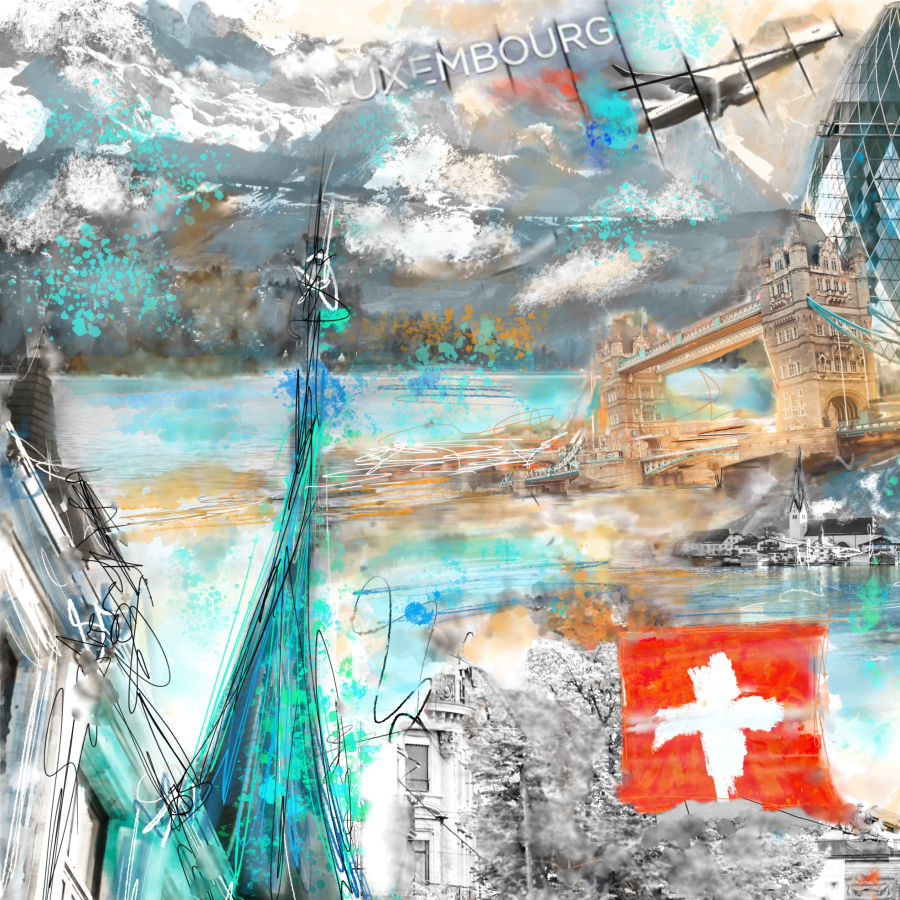
- Luxembourg banks and wealth managers serve clients worldwide.
Family Office Services
As part of our family office services, we assist affluent families in the structured management, coordination, and development of their overall wealth. Our goal is to take a holistic approach to financial, legal, and intergenerational issues to manage them efficiently.
To this end, we provide support with wealth transfers, foundation models, real estate investments, and private equity matters. When necessary, we leverage our network of partner banks in Luxembourg, Switzerland, Liechtenstein, and Germany, which are among the most prestigious institutions with an international focus.


Market Commentary
When political disorder becomes an export product, it should at least be subject to tariffs
June 4, 2026
Europe has long been paying for the Iran war. Not militarily, but economically. More specifically, it is paying through higher energy prices, weaker real wages, rising transport costs, and an economy that was hardly bursting with strength to begin with. France in particular shows how limited the room for manoeuvre has become. Growth expectations have recently been revised down further. At first glance, this may sound like a small adjustment, but in an environment of rising inflation and high energy prices, it is a clear warning signal. France can do little to relieve consumers through tax cuts because it lacks the fiscal space.
Germany appears more robust at first glance. Yet here, too, the effects are not being avoided, but merely redistributed. The so-called fuel rebate cushions prices at the pump, but it does not change the underlying burden. What drivers pay less is ultimately paid for by taxpayers. It is therefore not a solution, but an accounting shift. Energy-intensive industry remains vulnerable, private households remain under pressure, and the state is buying time at the expense of future budgets.
While Europe bears the follow-on costs, it appears remarkably defensive in trade policy. The EU does not want a new tariff conflict with the United States, even though it is by no means powerless vis-à-vis Washington. Especially in digital services, financial services, cloud offerings, and platform revenues, Europe would have leverage. Yet this strength is barely used. Fatally, the EU is once again standing in its own way. There are too many national interests, too little strategic unity, and too much fear of countermeasures. But anyone importing political disorder should at least talk about price tags.
A look back at recent weeks shows just how fragile the situation remains. The war began at the end of February with joint attacks by the United States and Israel on Iranian targets. Since then, the Strait of Hormuz has become the central bottleneck of the global economy. Reports of ceasefires and possible agreements repeatedly brought short-term relief to markets. At the same time, the negotiations remained contradictory. At times, an extension of the ceasefire was said to be within reach; at others, warnings of renewed attacks dominated. This uncertainty was immediately reflected in oil prices, bond yields, and equity markets.
The strongest single influence factor in all this is Donald Trump. The United States is not only militarily involved; through sanctions, naval blockades, threats, and offers of talks, it also largely defines the diplomatic framework. For markets, therefore, it is not only what Washington does that matters, but also what Trump says. And that is precisely the problem. His statements have fluctuated between optimism, escalation, and tactical ambiguity. At one moment, an agreement was supposedly close; shortly afterwards, nothing was to be rushed. Such communication does not create stability, but volatility.
Consumers and industry worldwide are paying the price. Energy is making transport, production, heating, electricity, and consumption more expensive. Companies are losing planning certainty, supply chains are becoming more costly, and energy-intensive sectors are coming under pressure. For households, the shock acts like an additional tax. What is particularly problematic is that rising energy prices are increasingly showing up in inflation data and interest-rate expectations. This means that a geopolitical shock is at risk of becoming a monetary policy problem.
At the same time, it would be too simplistic to assess the economic situation in purely negative terms. There is still a positive scenario, driven above all by expectations of fiscal stimulus and, on the technological side, by hopes for the positive effects of artificial intelligence. High investment in semiconductors, data centres, cloud infrastructure, software, and digital productivity could continue to support corporate earnings and growth. However, this scenario is becoming more fragile. The longer the war lasts, and the more energy prices, inflation, and interest rates rise, the greater the risk that AI euphoria will no longer be able to mask the real-economy burdens. For now, growth expectations are still supporting markets. But the margin of safety is becoming increasingly narrow.